
BachWalk — Early Musical Journeys of Johann Sebastian Bach
Featured Organists
Martina Pohl
Gottfried Preller
Johannis Unger
Christoph Bull
Oliver Stechbart
The film features interviews with five distinguished German organists, each speaking from within the historic churches that bear witness to Bach's early years. Their reflections illuminate the musical and spiritual world that formed the young composer.
Martina Pohl
Jacobikirche, Sangerhausen
The church where Bach almost received his first organist position after leaving St. Michael's School.
Gottfried Preller
Bachkirche, Arnstadt
Where Bach received his first organist position in 1703.
Johannis Unger
Marienkirche, Lübeck. (St. Mary's)
The great Marienkirche where Buxtehude presided — the destination of Bach's legendary walk.
Christoph Bull
Various historical churches including St. Michael's and St. John's in Lüneburg, St. James in Hamburg
Churches deeply connected to the musical culture of Bach's formative years in central Germany.
Oliver Stechbart
Divi-Blasii
Bach's second position as organist in 1708 and where his legacy lives on in the organ built to his specifications.
Featured Organs
The Organs of BachWalk
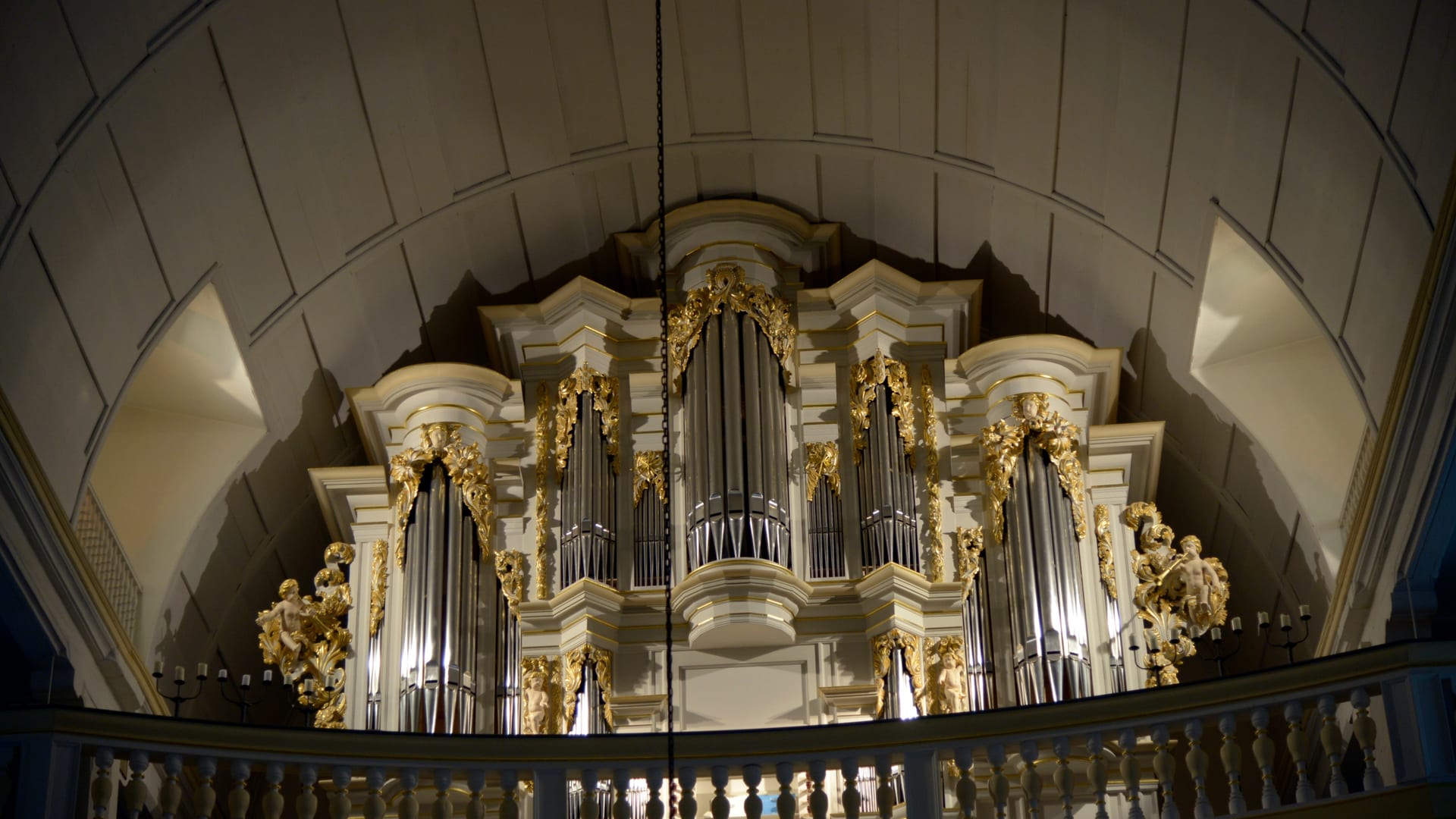
The film features performances on eight historic organs in churches connected to the early life and career of Johann Sebastian Bach.
Augustinerkirche, Erfurt
In 1716, a new organ was begun by Georg Christoph Stertzing and completed by Johann Georg Schröter. It was rebuilt in 1753, removed in 1850. A new organ was then installed in 1939 by E.F. Walcker & Cie. Nothing from Bach’s time survives. In 1716, while Bach was employed at Weimar, he and organ builder Johann Anton Weise of Arnstadt examined the new organ in St. Augustine’s, giving it high praise. Source: The Organs of J.S. Bach, A Handbook by Christoph Wolff and Markus Zepf, University of Illinois Press, English edition 2012.
Divi Blasii Kirche, Mühlhausen
1560–63 new organ by Jost Pape; 1676, rebuild by Jost Schäfer. 1687–91, partial rebuild and enlargement II/29 by Johann Friedrich Wender. At Bach’s recommendations, the organ was enlarged by Wender in 1708 to III/37. After various rebuilds, in 1821–23, new organ by Johann Friedrich Schulze using the original case. 1959, new organ by Schuke Orgelbau (Potsdam) according to Bach’s disposition of 1708 but enlarged by five stops to III/42. Pitch: Chorton. Temperament: well-tempered (according to Ratte and Rathey). Source: The Organs of J.S. Bach, A Handbook by Christoph Wolff and Markus Zepf, University of Illinois Press, English edition 2012.
Bring BachWalk to Your Audience
BachWalk is available for screenings at concert halls, universities, music festivals, and cultural institutions. We welcome inquiries from programmers, educators, and presenters.